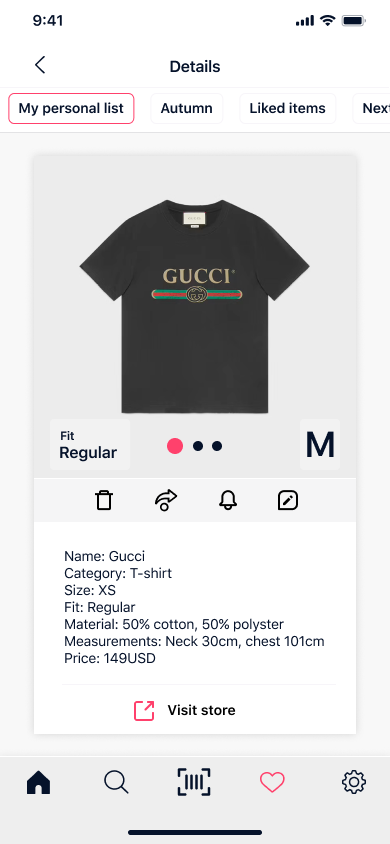
Mezura explored how body measurement could make online fashion shopping less uncertain. I designed the journey from onboarding and measurement to product discovery, using research into sizing, fit and shopping decisions to guide the experience.
I investigated the friction and decision-making challenges faced by online fashion shoppers, particularly women aged 18 to 50. The focus was on understanding how fit, sizing, quality, style, pricing, and confidence influence the decision to purchase clothing online.
Dec 2020
Mezura AI
Research, Benchmark, Personas, User flow, Wireframes, Prototypes, UI
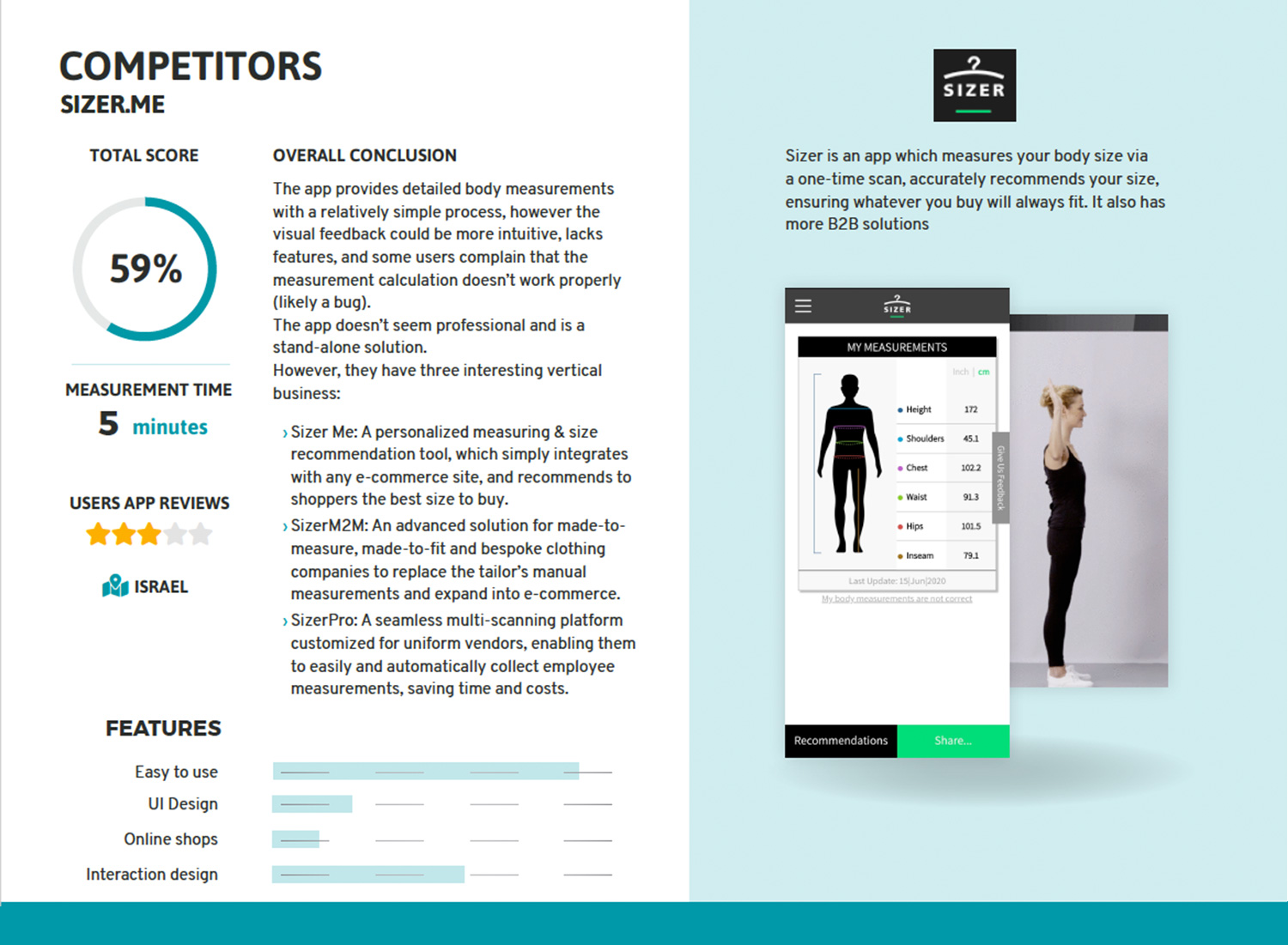
Through research, I explored the main sources of uncertainty in online fashion shopping: finding the right fit, understanding individualized sizing, judging quality without seeing the garment in person, matching products to personal style, evaluating price, and feeling confident enough to complete a purchase.
The product concept addressed these challenges through a body-measurement experience that could support more relevant sizing and recommendations. The broader goal was to reduce uncertainty between discovering a garment and deciding whether it was right for the user.
This positioned the measurement experience as more than a standalone feature: it became part of a wider shopping journey designed around fit, personal preferences, product information, and confidence.
The research helped translate a broad fashion-shopping problem into a set of concrete user needs. Fit and individualized sizing were closely connected to purchase confidence, while quality, style, and pricing influenced whether users considered a product relevant and worth buying.
We used the research findings to define the needs, goals, frustrations, scenarios, and behaviours that were most relevant to the shopping experience. This helped turn a broad audience into a clearer representation of the people the product needed to serve and the problems the experience needed to solve.
Through user interviews and surveys, we created Jane Petterson as a persona that consolidated the main research insights. Jane captures the goals, frustrations, scenarios, and expectations that shaped the product direction. A central need was to make it easier to find the right size for each clothing item, evaluate quality and price, and discover recommendations that fit the user's personal style.
The persona's introduction captures the core expectation behind the experience:
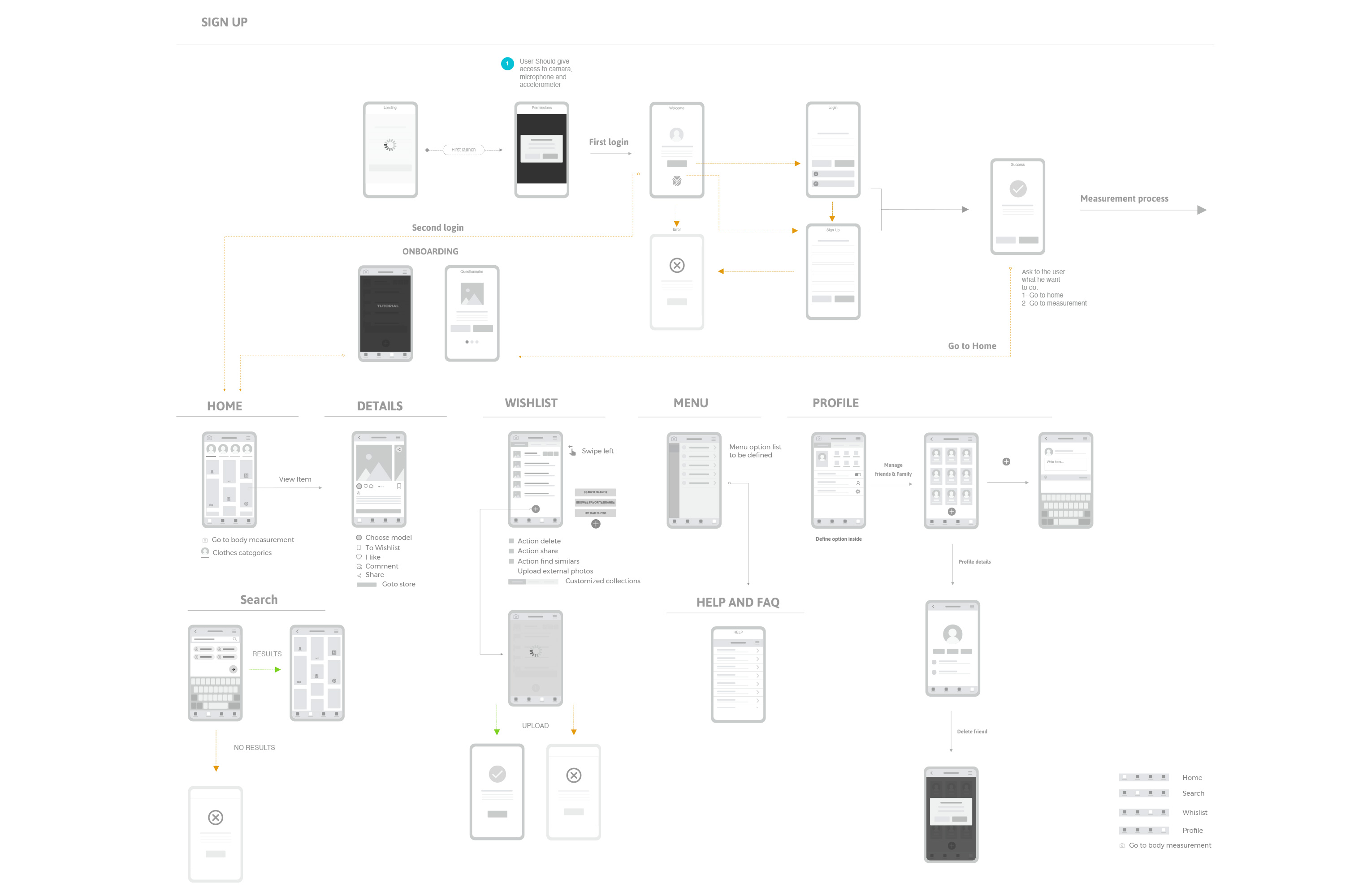
“I would like to have a solution for online shopping where I can easily find my size for each clothes item, buy them at a reasonable price, and assure that they have a good quality. I would also like to get some trends recommendations that fit with my personal style”With the core user needs defined, I mapped the primary mobile journey and prioritized the features that users would encounter during the initial experience. The flow connected onboarding, body measurement, and shopping so the measurement capability supported the larger product journey rather than becoming an isolated step.
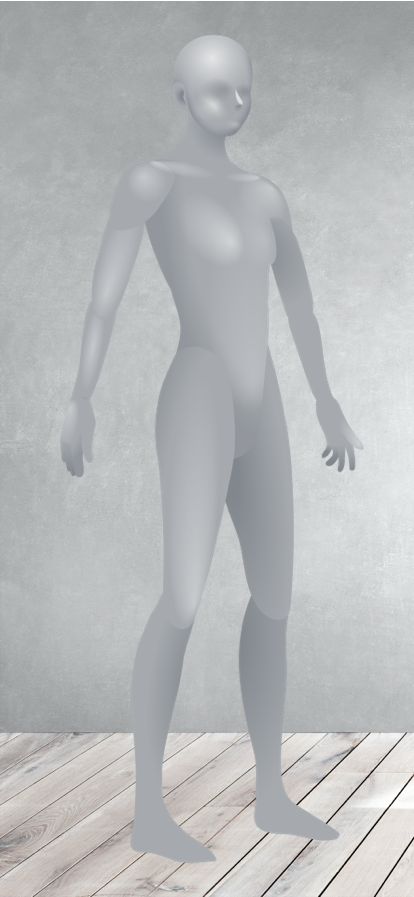
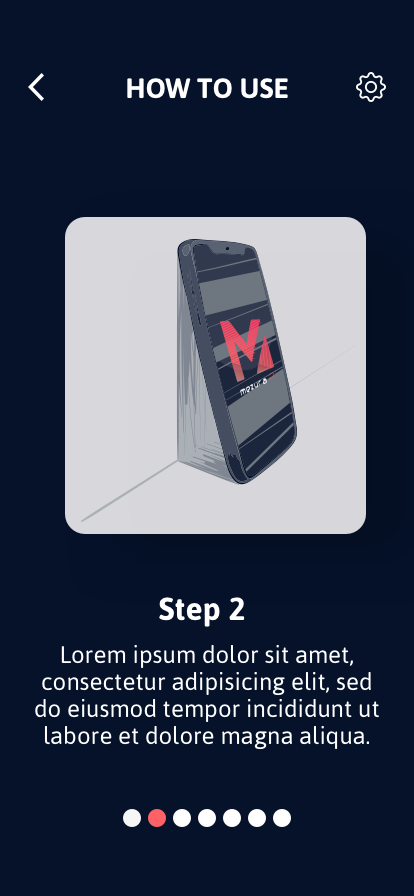
The body measurement flow was designed around clarity and guidance. Audio and visual feedback were incorporated to communicate progress, explain what users needed to do, and make the interaction easier to follow.
The resulting flow established a clearer path from entering the product to obtaining useful measurement information and continuing into the shopping experience. The design goal was to reduce uncertainty and make the experience feel more predictable for users.
The first version was delivered under pressure to launch an MVP quickly. We had completed research, but did not translate enough of those findings into the released experience. The product missed its target of at least 100 new users per week. Testing helped us understand that the initial journey did not provide the expected value.
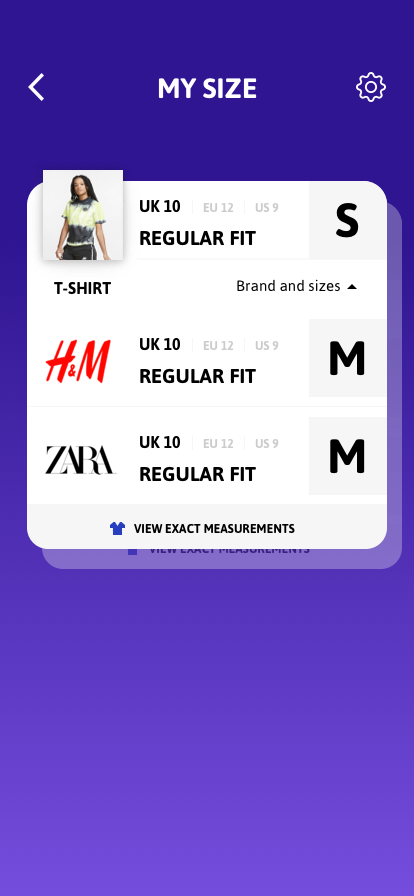
I used those findings to reconsider how measurement connected to the rest of the shopping journey. The second iteration brought measurement results, style preferences and product discovery closer together, with clearer guidance and feedback during the interaction.
The trade-off in V1 was speed of delivery at the expense of applying the research thoroughly. That gave us an early release, but also created rework. For V2, testing was used to assess the revised experience before treating the new direction as a solution. The lesson was to validate whether the core journey delivers useful value, not only whether users can complete its steps.
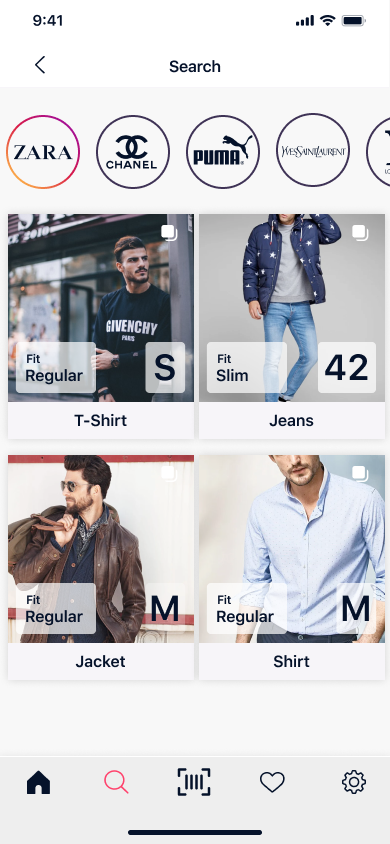
The second design iteration connected measurement results, style preferences and product discovery more clearly. Users could move from learning about their fit to evaluating relevant garments within the same journey.
Personalized recommendations were part of the product concept. The interface work focused on showing why a garment might be relevant and keeping sizing information available when users compared options.
After the V2 release, adoption exceeded the original target of 100 new users per week. This was a recovery from the first version's missed target, not evidence of a measured change in purchase conversion. The strongest lesson was the cost of rushing from research to an MVP without carrying the findings through to the experience: V2 required us to revisit that connection and validate it.